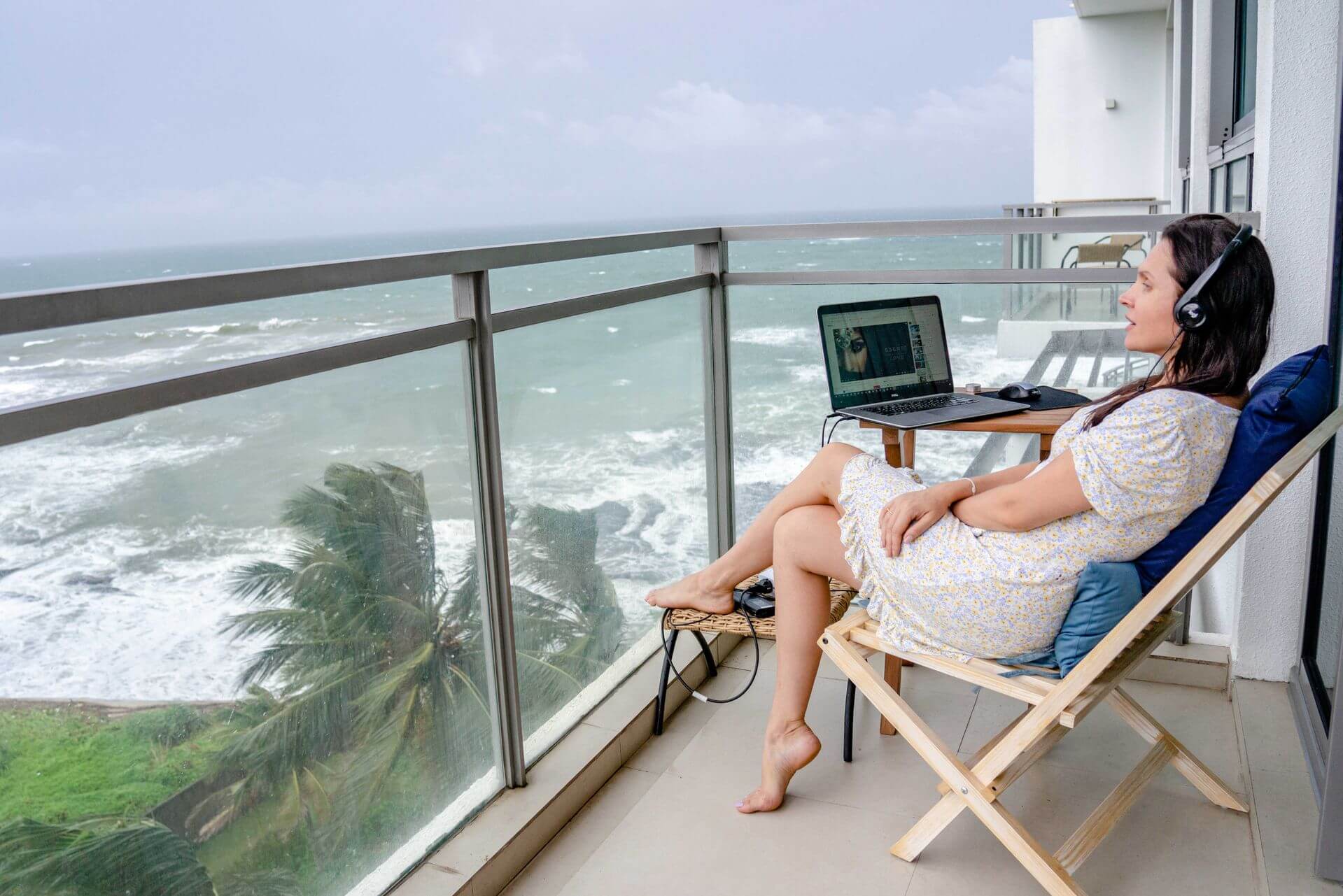
The apartment looks perfect in the photos. Floor-to-ceiling windows, a balcony overlooking the city, tasteful furniture and a coffee shop just around the corner. It seems like exactly the sort of place where you’d happily spend a few weeks working remotely.
You book it.
On the first morning, you open your laptop at the dining table. The chair is uncomfortable, the nearest power socket is behind the sofa, and the Wi-Fi keeps dropping just as your video call begins. By lunchtime, you’re searching for a café where you can actually get some work done.
The apartment hasn’t changed. Your expectations of it have.
This is the holiday apartment trap: choosing a place that looks wonderful to stay in without checking whether it works for the life you’re planning to live there.
For a weekend away, that might not matter. For a two-week work trip, a month in another city or a longer digital nomad stay, it can make the difference between a refreshing change of scenery and an unnecessarily difficult working week.
A place to stay isn’t necessarily a place to work
Holiday accommodation is usually presented around the things that make a trip appealing: location, views, interiors, nearby attractions and amenities.
These are all worth considering. The problem is assuming that a property suited to a holiday will automatically suit a working day.
Remote work introduces a different set of requirements. You might need to join several meetings, concentrate for hours at a time, handle confidential information or work across time zones. You may also need somewhere to prepare meals, take breaks and switch off when the day ends.
A beautiful living room doesn’t tell you whether you can work comfortably for six hours. A listing that mentions Wi-Fi doesn’t tell you whether it can support a video call. And a photograph of a laptop on a desk doesn’t tell you whether that desk is usable.
The right question isn’t simply, “Would I enjoy staying here?”
It’s also, “Could I comfortably live and work here for the entire duration of my trip?”
Five things that can make or break a remote-work stay
1. Wi-Fi that works when you need it
Internet access is one of those things you barely notice when it’s reliable. When it isn’t, it can dominate your entire day.
A property might advertise free Wi-Fi without offering any meaningful information about speed, stability or coverage. That may be perfectly adequate for browsing and streaming, but less suitable for frequent video calls or transferring large files.
Before booking, ask the host for a recent speed-test result if connectivity is important to your work. Find out whether the signal reaches the room where you’ll be working and whether there is a backup option if the connection fails.
A mobile hotspot can provide some protection, but check local network coverage and data limits before relying on it.
If your job depends on being available during specific hours, treat connectivity as a requirement, not a bonus.
2. A workspace you can use for a full working day
A dining table can double as a desk. That doesn’t mean it should have to.
Look for a stable table or desk, a comfortable chair, accessible power sockets and enough space for your laptop and any additional equipment. Natural light is useful, but being able to adjust the lighting matters too.
Think about ergonomics as well. A chair that feels fine over breakfast may become uncomfortable after several hours. If you’ll be working from the property regularly, consider whether you can maintain a reasonably comfortable posture.
Check the actual workspace photographs rather than relying on a listing’s “work-friendly” label. If the pictures don’t show enough detail, ask for more.
You don’t necessarily need a dedicated home office. You do need somewhere that makes working practical rather than an everyday improvisation.
3. Quiet when the calendar demands it
A lively neighbourhood can be part of the appeal of staying somewhere new. It’s less appealing when construction starts outside your window ten minutes before a client presentation.
Noise can come from traffic, nearby bars, shared corridors, thin walls, building work or other guests. Some of it is difficult to predict, but you can reduce the uncertainty.
Read recent reviews and look for specific comments about noise, not just overall ratings. If you’re a light sleeper or have early meetings, ask about the room’s position, nearby construction and the building’s usual activity.
Also consider what happens during the day. A property may be quiet overnight but sit above a busy café or face a crowded street.
If you regularly handle calls, headphones can help. They won’t solve every problem, particularly when you need to speak.
4. The everyday details nobody puts in the hero photograph
The small practicalities become important when you’re staying for more than a few nights.
Where will you buy groceries? Is there a reliable place to get coffee or lunch? Can you do laundry without spending half a day arranging it? Is the nearest coworking space walkable? How easy is it to get around without constantly relying on taxis?
These questions may sound less exciting than finding an apartment with a rooftop terrace. But they’re often more relevant to your daily experience.
For a longer stay, also check what is included in the price. Electricity, cleaning, laundry, deposits, service fees and other charges can affect the actual cost of accommodation.
A property that looks cheaper initially may turn out to be less economical once you account for the extras.
5. Somewhere to work — and somewhere to stop
One of the attractions of working remotely is the freedom to choose your surroundings. One of its challenges is that work can follow you everywhere.
If your bed, desk, dining area and evening entertainment all occupy the same small room, it may become harder to establish a boundary between work and personal time.
A separate workspace is helpful, but it isn’t essential. Even a modest arrangement can work if you can put your laptop away, leave the property for a walk or establish a clear end to your working day.
Consider how the accommodation will feel after work, not just during it. Is there somewhere to cook, relax, exercise or spend time outdoors? Can you get out into the neighbourhood easily?
The best work-friendly stay isn’t necessarily the one with the most impressive desk. It’s the one that supports the rest of your life, too.
The listing looks good. What should you check before booking?
You don’t need to interrogate every host or turn accommodation hunting into a research project. A few targeted checks can reveal a surprising amount.
Before confirming a booking, work through this short list:
- Internet: Is the connection reliable enough for your actual workload?
- Workspace: Is there a usable desk or table, a suitable chair and accessible power?
- Noise: What do recent reviews say about daytime noise and the surrounding area?
- Practicalities: Are laundry, kitchen facilities, cleaning and other essentials suitable for the length of your stay?
- Location: Can you reach groceries, transport, cafés or coworking spaces without too much effort?
- Total cost: Have you accounted for fees, utilities, deposits and likely day-to-day expenses?
- Booking terms: Are the cancellation policy, check-in arrangements and extension options clear?
If anything important remains unclear, contact the host before booking. A straightforward question is much easier to deal with than a problem discovered after arrival.
For example, you could write:
“Hi, I’m planning to work remotely during my stay and will have regular video calls. Could you confirm the Wi-Fi setup, whether the workspace has a proper chair and desk, and whether there are any known daytime noise issues? Thanks!”
A useful response should address your actual questions rather than simply repeat the listing description.
Should you book an apartment, a hotel or a coworking-friendly stay?
There isn’t one right answer. The best option depends on how long you’re staying, what your work involves and how much independence you want.
A holiday apartment can be a good choice when you want a kitchen, more living space and the freedom to settle into a neighbourhood. Its suitability depends heavily on the actual workspace, internet and building conditions.
A hotel may suit shorter business trips, particularly when predictable service and a straightforward check-in matter more than having a full kitchen. However, room layouts, desk setups and internet quality vary.
A coworking-friendly accommodation option may be worth considering if you need a dependable place to concentrate or meet other remote workers. Check whether workspace access is actually included, whether reservations are necessary and how far it is from your accommodation.
You can also combine options. For example, stay in an apartment for most of the trip and use a coworking space on meeting-heavy days.
The aim isn’t to find the accommodation with the most amenities. It’s to find an arrangement that fits your working habits, budget and priorities.
The real cost of choosing the wrong place
The cost of accommodation isn’t limited to the amount you pay at checkout.
Imagine booking a cheaper apartment that has no comfortable workspace. You end up buying coffee at a café every morning, paying for coworking access several times a week and spending time travelling between locations. If you also lose working time because of an unreliable connection, the original saving may not look so attractive.
This doesn’t mean that a more expensive property is automatically better. A higher price doesn’t guarantee a reliable internet connection or a comfortable chair.
It means you should compare the total experience rather than the nightly rate alone.
Before booking a longer stay, estimate the likely additional costs: transport, meals outside the property, coworking fees and any equipment you might need. Compare that figure with a property that already meets more of your requirements.
Your time and ability to work comfortably matter, too, even if they’re harder to put into a spreadsheet.
A better way to plan your next work-from-anywhere trip
You don’t need to abandon beautiful accommodation or turn every trip into a business exercise. The point is to balance the experience you want with the practical conditions you need.
Start by deciding what your working week will look like. How many hours will you spend on calls? Do you need complete quiet? Will you work standard office hours or coordinate with colleagues in another time zone? How much time will you spend indoors?
Then identify your non-negotiables. For one person, that’s reliable internet and a proper desk. For another, it’s a quiet bedroom, walkable surroundings and a kitchen.
Separate those requirements from the things you’d simply enjoy having. A balcony might be a lovely extra; a dependable internet connection might be essential.
Finally, evaluate the property against your actual plans, not just the photographs.
A little preparation before you book can save you from spending the first three days of a new destination trying to find somewhere else to work.
Key takeaways
- Attractive photographs don’t tell you whether accommodation is suitable for remote work.
- Check internet reliability, workspace comfort and daytime noise before booking.
- For longer stays, everyday convenience and the full cost of living matter as much as the nightly rate.
- Choose accommodation around your working habits, not a generic list of amenities.
- If a critical detail isn’t clear, ask the host before committing.
Before you book your next stay
The appeal of working from anywhere is that your life doesn’t have to revolve around one office or one city. You can discover a new neighbourhood, spend your evenings somewhere different and change your surroundings without putting your work on hold.
But flexibility works best when the practical details are taken care of.
The next time an apartment catches your eye, look beyond the balcony and the carefully arranged cushions. Picture an ordinary Tuesday: your first meeting, a few uninterrupted hours of work, lunch, another call and the moment you finally close your laptop.
If the place still looks like a good fit, you’re probably asking the right questions.
At OyeAmiko, we’re interested in the practical side of working and living beyond the traditional office. Because a good work-from-anywhere experience isn’t just about where you go. It’s about finding a way to work that lets you make the most of being there.
What’s the one thing you won’t compromise on when choosing a place to work remotely? Reliable Wi-Fi, a proper workspace, a quiet neighbourhood or something else? Start with that answer when planning your next stay.
— OyeAmiko